

If you’ve ever started at a startup and felt like you were left to fend for yourself, you’re not alone. Startup onboarding is notoriously broken, and that’s because startups are, well, startups: fast-moving, resource-lean, and often chaotic. But it doesn’t have to be this way.
Why Startup Onboarding Is Uniquely Broken
Onboarding at a startup isn’t just hard because startups are young companies—it’s uniquely challenging for a few key reasons:
- Speed trumps process. Startups obsess over moving fast and shipping features. When you’re hustling to hit product-market fit or close funding rounds, onboarding can seem like a luxury no one has time for.
- Nobody owns onboarding. Unlike more mature companies with dedicated HR teams or learning & development staff, startups often assume onboarding is “someone’s job”—but it usually isn’t. It falls through the cracks.
- Founders think culture is self-evident. They built the company, so the vision, values, and ways of working feel obvious to them. Unfortunately, new employees often find their new culture confusing or opaque.
“When the founder lives and breathes the company culture, they forget it’s invisible to the new hire until it’s explicitly explained.”
This results in a perfect storm of confusion, uncertainty, and wasted ramp-up time. But good news: startups that get onboarding right see big benefits.
The 5 Signs of Good Startup Onboarding
There’s no silver bullet, but effective startup onboarding usually shares these five key characteristics:
- 1. Pre-boarding email: Before your first day, you get a clear email outlining what to expect, what to prepare, and how to get set up. This includes links to tools, Slack channels, and any paperwork.
- 2. Day-1 setup complete: Your laptop, accounts, and access to all necessary software and documentation are ready to go. No scrambling for passwords or begging for access.
- 3. Assigned buddy or mentor: You’re paired with someone who can answer questions, explain the unwritten rules, and act as your onboarding guide through your first weeks.
- 4. Written 30-day goals: Clear expectations are set upfront about what success looks like in your first month. This keeps you focused and reduces guesswork.
- 5. Weekly check-ins: Regular one-on-ones with your manager or buddy ensure you’re supported, obstacles get addressed quickly, and feedback flows both ways.
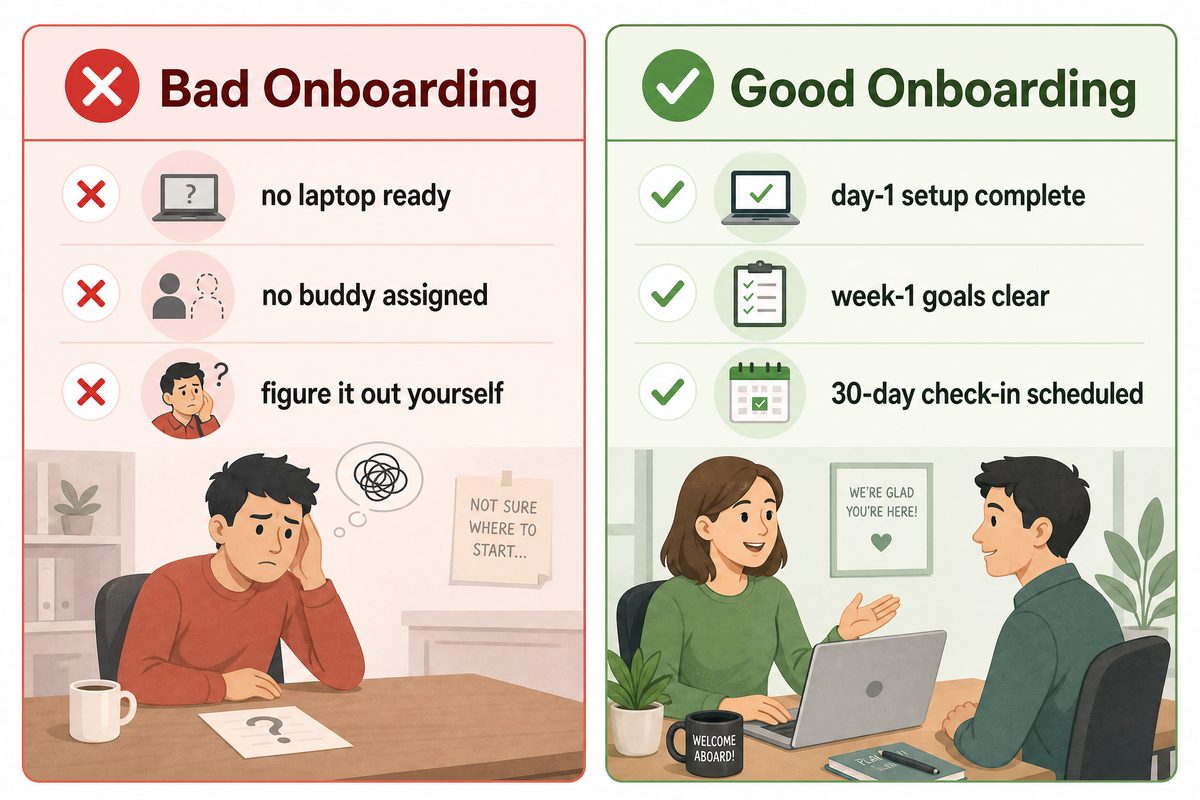
According to Brandon Hall Group, companies with structured onboarding programs enjoy 82% higher retention rates and 70% higher productivity among new hires. That’s no small impact for something often overlooked.
Onboarding Yourself: A Checklist When Your Company Fails You
Sometimes, the startup you joined just doesn’t have the bandwidth or experience to onboard you properly. In that case, don’t wait around—take control of your own onboarding. Here’s a week-by-week checklist to help you ramp up on your own terms:
Week 1: Get Your Bearings
- Introduce yourself in Slack/email: Send a friendly intro to your team and key stakeholders. Here’s a template:
Hi all, I’m [Your Name], excited to join as the new [Your Role]. I’m eager to learn and contribute—please feel free to reach out or share tips! Looking forward to working with you all.
- Request access and info: Politely ask for any missing tools, documents, or context. Example Slack message:
Hey [Buddy/Manager], I’m getting set up and would love any onboarding docs or project overviews you recommend. Also, keen to know who I should connect with for [specific topic].
- Start reading company docs, wiki pages, and past project updates.
- Observe team communication patterns and culture in Slack.
Week 2: Dig Deeper
- Schedule 1:1s with your buddy, manager, and cross-functional partners.
- Ask questions about product vision, roadmap, and team priorities.
- Begin small tasks or bug fixes to get hands-on experience.
- Draft your own 30-day goals if none have been provided, then share for feedback.
Week 3: Build Momentum
- Take ownership of a small project or deliverable.
- Continue learning tech stack, codebase, or processes.
- Request feedback on your progress and communication style.
- Document what you learn—write your own onboarding notes for future new hires.
Week 4: Establish Your Rhythm
- Present your work or findings at a team meeting.
- Check in with your manager to align expectations for the next 30 days.
- Identify gaps in onboarding that you can help improve or formalize.
- Celebrate surviving month one in a startup jungle!
Empower Yourself—and Your Future Team
Startup life can be exhilarating and maddening in equal measure, especially when you’re trying to find your footing. But remember: onboarding is a two-way street. If your company doesn’t have a polished process yet, you can set the tone by being proactive, communicative, and organized.
And if you’re still searching for that startup that values its people enough to invest in structured onboarding, check out NewJob.tech. We’re on a mission to connect talent with startups that don’t just talk about culture—they back it up with action.
Because the first day should never feel like a survival test. It should feel like the start of something exciting.