

I also once sent 50 cold emails using a generic template I found online. I got exactly zero replies.
The difference wasn't my resume. It was the email itself. Most people treat cold emails like a cover letter delivery system. "Hi, I'm Tim. I saw your job posting. Here is my resume." Delete.
A good cold email is a painkiller. It identifies a specific problem the recipient has, proves you can solve it, and asks for a very low-friction next step. Here is the exact anatomy of a cold email that actually works, plus five templates you can steal.
The Anatomy of a 40% Response Rate Email
If you're emailing a startup founder or hiring manager, their inbox is a disaster zone. You have about three seconds to prove you're not a bot and not a waste of time.
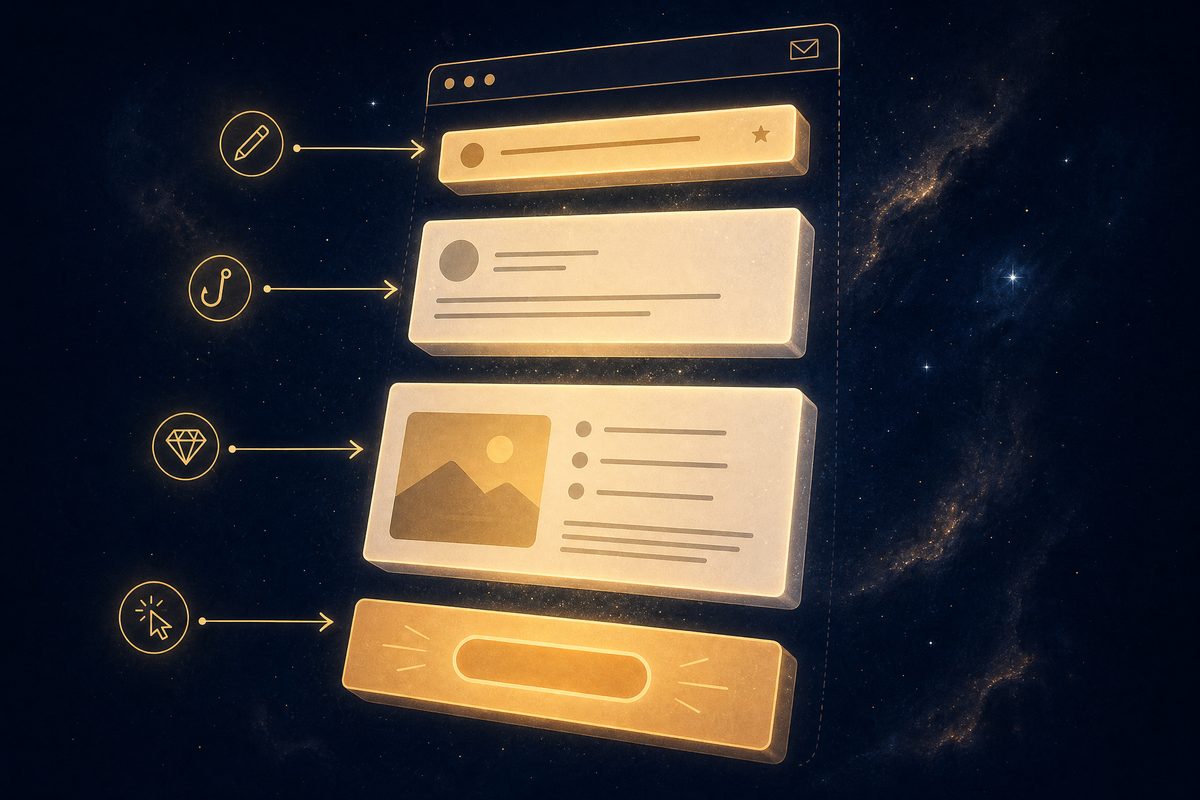
1. The Subject Line (The Bouncer)
The subject line has one job: get the email opened. Do not be clever. Be specific. "Question about [Specific Feature]" or "[Your Role] interested in [Specific Goal]" works infinitely better than "Application for Software Engineer."
2. The Opening Hook (The "I'm Not a Bot" Proof)
Your first sentence must prove you actually know who they are. "Hope you're having a good week" is filler. "Loved your recent podcast on [Topic], especially the part about [Specific Detail]" proves you did your homework.
3. The Value Proposition (The Painkiller)
Don't list your responsibilities at your last job. Translate them into outcomes for their company. "I scaled the backend at [Previous Startup] from 10k to 1M users. I noticed you're hitting similar growth milestones and might be dealing with [Specific Problem]."
4. The Call to Action (The Low-Friction Ask)
Never ask for "15 minutes to pick your brain" or "a quick chat." Ask a specific, easy-to-answer question. "Are you currently looking to expand the engineering team to tackle this?" or "Is this a priority for Q3?"
Template 1: The "I Found a Bug" Approach
This is highly effective for engineers, designers, and PMs. You find a small, non-critical issue and offer the solution.
Subject: Quick thought on the onboarding flow
Hi [Name],
I was testing out the new [Feature] yesterday (huge fan of the clean UI, by the way). I noticed that when a user drops off at step 3, there's no email recovery trigger.
At my last company, we implemented a simple recovery sequence that bumped conversion by 12%. I actually sketched out how it could work for [Company Name] here: [Link to loom/doc].
I'm currently exploring new PM roles and would love to help build out the growth engine here. Are you open to a quick chat next week?
Best,
[Your Name]
Template 2: The "Congratulate and Pivot" Approach
Use this when a company just announced funding, a major launch, or an acquisition.
Subject: Congrats on the Series A + engineering hiring
Hi [Name],
Saw the news about the Series A led by [VC Name]—massive congratulations. I know getting that over the line is a grind.
I imagine scaling the infrastructure is going to be a massive priority now. I spent the last two years as a backend engineer at [Similar Company], where we rebuilt the core monolith into microservices right after our Series A.
I'm looking for my next challenge and would love to bring that experience to [Company Name]. Are you the right person to speak with about engineering roles, or should I reach out to someone else?
Best,
[Your Name]
Template 3: The "Direct Competitor" Approach
If you work at a direct competitor or a company in the exact same space, you have a massive advantage. Don't bury the lede.
Subject: Ex-[Competitor Name] Sales Rep
Hi [Name],
I've been following [Company Name] for a while. You guys are building a much better solution for [Specific Problem] than what we had at [Competitor Name].
I spent the last 18 months selling into the exact same enterprise accounts you're targeting now. I know the objections, I know the buying cycles, and I know why they hesitate.
I'm looking to make a move to a product I actually believe in. Is expanding the mid-market sales team on the roadmap for this quarter?
Best,
[Your Name]
The Follow-Up (Crucial)
If they don't reply, it doesn't mean they hate you. It means they are busy. Always send exactly one follow-up, 3-4 days later. Keep it brutally short.
Subject: Re: [Original Subject]
Hi [Name] - Bumping this to the top of your inbox. Let me know if this is a bad time, happy to reconnect in a few months if so.
Stop applying through the front door. Find the hiring manager's email (use tools like Hunter.io or Apollo), write a painkiller email, and hit send.