

The Due Diligence Checklist: 20 Questions to Ask Before You Join a Startup
Let's be clear: startup life is a rollercoaster, and 90% of startups fail (thanks, CB Insights!). Even more worrying, about 23% of those failures stem from team issues — folks just not meshing, leadership falling apart, or founders running out of steam. That’s why digging into the details early can save you a world of pain.
We’ll break down the checklist into four categories, each with five critical items. For every item, I’ll suggest a question you can ask during your interview or discovery calls. Keep track of any red flags you spot — we’ll talk scoring at the end.
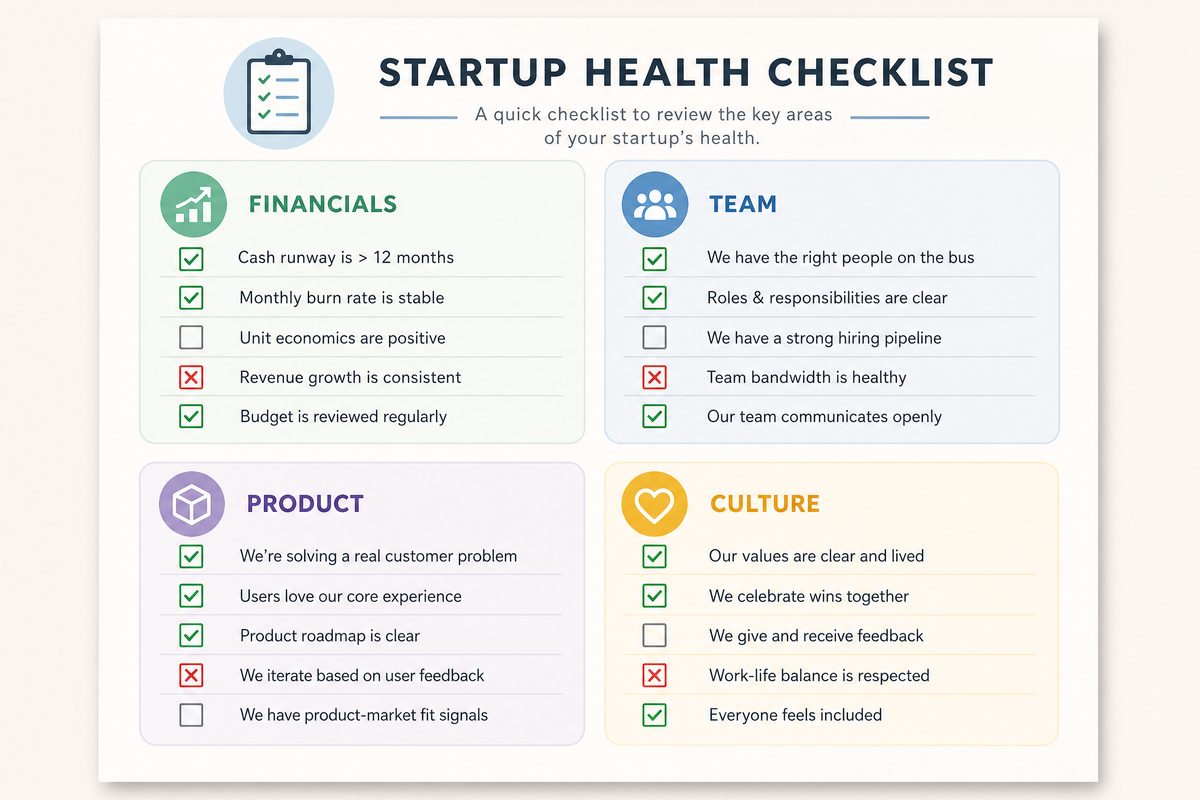
1. Financials: Is the Startup’s Money Game Strong Enough to Keep You Employed?
Money talks. If the financial foundation is shaky, you might be writing your resignation letter sooner than you think. Here are five key financial indicators to dig into:
1.1 Last Funding Round + Date
Question to ask: “Can you share details about your most recent funding round and when it closed?”
The more recent and substantial the funding, the better the runway. If the last round was a year ago with minimal cash raised, that’s a red flag.
1.2 Runway Remaining
Question to ask: “How many months of runway does the company currently have?”
This tells you how long they can keep the lights on without needing more cash. Less than 12 months? Prepare for a bumpy ride.
1.3 Burn Rate
Question to ask: “What’s the monthly burn rate, and how does it compare to revenue?”
Burn rate is the cash the company spends monthly. If it significantly exceeds income without growth plans, that’s a firewall to watch closely.
1.4 Revenue Status
Question to ask: “Is the company generating revenue, and what’s the growth trend?”
Startups bleeding cash without revenue or a clear path to revenue are high risk. Positive revenue growth is a green light.
1.5 Investor Quality
Question to ask: “Who are your main investors, and how involved are they in guiding the company?”
Seasoned investors bring more than money — they provide strategic support and can help weather storms. Unknown or absent investors are a warning sign.
2. Team: Who You’ll Be Working With Matters More Than You Think
Great ideas fail with weak teams. Conversely, strong teams can pivot and survive. So, sizing up the people you’ll be joining is critical.
2.1 Founder Backgrounds (Check LinkedIn)
Question to ask: “Could you tell me more about the founders’ professional backgrounds and previous successes or failures?”
Look for founders with relevant experience, grit, and a track record that doesn’t scream “first-timer disaster.”
2.2 Glassdoor/Blind Reviews
Question to ask: “How do you address feedback from current and former employees?”
Check review sites for patterns — are people praising leadership? Complaining about stress? Beware if the company hides or ignores feedback.
2.3 Engineering Turnover
Question to ask: “What’s been the turnover rate in the engineering or product teams over the past year?”
High churn in technical roles often signals deeper issues — poor management, toxic culture, or unrealistic expectations.
2.4 Leadership Stability
Question to ask: “How stable is the leadership team? Have there been recent changes in key roles?”
Startups pivot, but constant leadership churn can mean chaos and unclear direction.
2.5 Team Size Trajectory
Question to ask: “How has the team size changed over the last 6-12 months, and what are your hiring plans?”
Rapid expansion without solid footing may be reckless; stagnant or shrinking teams might suggest trouble.
3. Product: Is There Real Demand or Just Hype?
Cool ideas are great, but users and market traction tell the real story. Product health is your crystal ball.
3.1 Actual Users / Revenue (Not Just “Traction”)
Question to ask: “Can you share active user numbers or revenue figures that demonstrate product adoption?”
Vaporware or vanity metrics (like website visits) don’t pay salaries. Look for genuine engagement and paying customers.
3.2 Market Size
Question to ask: “What’s the total addressable market (TAM) for your product or service?”
Small or niche markets can limit growth and exit opportunities. Bigger markets mean bigger opportunities — but also more competition.
3.3 Competitive Landscape
Question to ask: “Who are your main competitors, and what’s your competitive advantage?”
Understanding competition reveals how defensible the startup’s position is. If “we don’t have any competitors” is the answer, it’s time to probe further.
3.4 Product-Market Fit Signals
Question to ask: “What feedback or data tells you that your product fits the market?”
Look for positive retention rates, repeat customers, or growing demand. If the product still feels experimental, caution is warranted.
3.5 Tech Debt Indicators
Question to ask: “How much technical debt exists, and how do you manage it?”
Big tech debt means future firefighting instead of innovation. Startups embracing code quality and refactoring have a healthier future.
4. Culture: What’s the Work Life Really Like?
The culture can make or break your experience. It’s not just about ping pong tables — it’s about respect, growth, and sanity.
4.1 Actual Work Hours (Ask Employees)
Question to ask current employees: “What are typical work hours, and how often do crunch times occur?”
Beware of startups where “always-on” is the norm. Sustainable pace = long-term happiness.
4.2 Remote/Hybrid Policy Enforcement
Question to ask: “How strictly do you enforce remote or hybrid work policies?”
Flexible work is a perk if it’s real. If policy says remote but culture shames it, that’s a red flag.
4.3 Equity Refresh Policy
Question to ask: “Is there an equity refresh or additional stock option grants over time?”
Equity isn’t a one-and-done deal. Good startups reward ongoing contribution, which shows long-term thinking.
4.4 Promotion Path
Question to ask: “What does a typical promotion timeline look like?”
Undefined or nonexistent promotion paths usually mean you’ll stagnate. Clear growth routes indicate the company invests in people.
4.5 Decision-Making Style
Question to ask: “How are decisions made—top-down, consensus, or agile processes?”
Opaque or chaotic decision-making can lead to frustration. A transparent, consistent style is a sign of maturity.
Red Flag Score: When to Greenlight, Slow Down, or Walk Away
Now, for the slightly paranoid (but practical) part: keep a tally of how many red flags you spot across these 20 items. Red flags might be vague answers, outright refusals to share info, or clear negative signals.
- 0-3 flags: Green light. The startup looks solid enough to join.
- 4-7 flags: Yellow caution. Ask more questions, seek employee opinions, and weigh the risks carefully.
- 8+ flags: Walk away. Your gut and the data agree: this startup isn’t ready to support your career.
“In startups, trusting your intuition is good, but backing it up with due diligence is even better. Don’t just dive in because the offer looks good on paper.” – Startup Career Mentor
Remember, your career is a marathon, not a sprint. Startups can be amazing — but only if you pick the right one. Use this checklist like a mental Swiss Army knife. It’s not about being cynical; it’s about being smart and informed.
Ready to find your dream startup without the nasty surprises? Check out NewJob.tech, the startup job aggregation platform where we help you discover vetted, promising startups with transparency and insight.