

The Real Deal: Which Tech Roles Are Actually Open to Career Changers?
Let's get this out of the way upfront: not every tech job is equally accessible if you’re coming from a non-tech background. The good news? The startup ecosystem is hungry for talent with diverse perspectives and real-world experience, which means some roles are ripe for people pivoting into tech.
Here’s a quick rundown:
- Accessible Roles:
- Product Management (Technical PM): Your skills in managing projects, coordinating teams, and understanding customer needs can shine here.
- Data Analytics: If you’re comfortable with numbers and storytelling, this is your playground.
- UX Research: Your ability to empathize and understand user behaviors can set you apart.
- Sales Engineering: Great if you like blending technical know-how with customer interaction.
- Customer Success: Your communication skills and problem-solving abilities can make you a superstar here.
- Harder-to-Crush Roles (but not impossible):
- Software Engineering (SWE)
- Machine Learning Engineering
Why harder? These roles usually require deep technical skills, often built over years of formal education or intense coding bootcamps. But hey, if that’s your dream, prepare for a longer journey.
The 6-Month Pivot Framework
Switching careers isn’t an overnight miracle, but with laser focus and a smart plan, you can make it happen in six months. Here’s a month-by-month playbook to guide your journey:
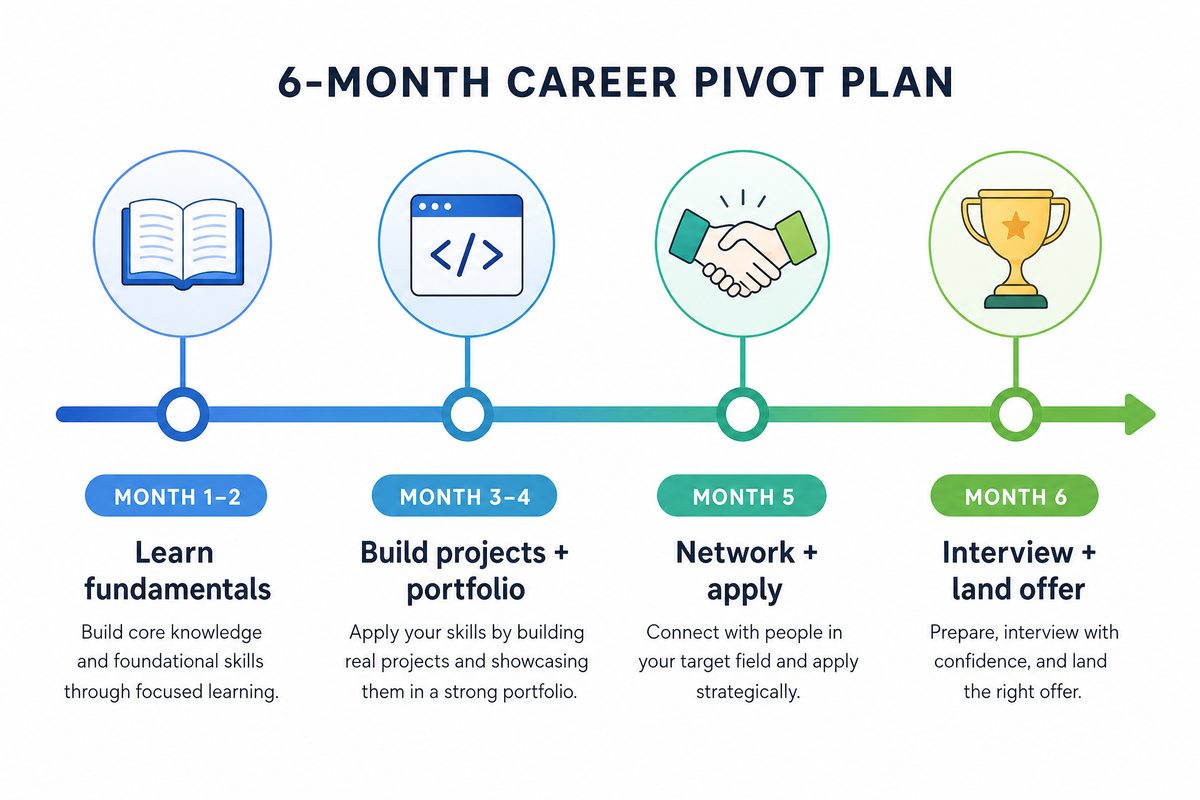
Months 1-2: Build Your Skill Foundation
This is where you lay the groundwork. Focus on the core skills relevant to your target role using free or low-cost resources.
- Product Management: Take University of Virginia’s Digital Product Management course on Coursera. Complement with Product School’s free webinars.
- Data Analytics: Start with DataCamp's Intro to Python for Data Science or Kaggle’s free data analysis courses. Learn SQL basics on Mode Analytics.
- UX Research: The Interaction Design Foundation’s User Research course is a great start. Follow blogs like UX Collective.
- Sales Engineering: Brush up on technical product knowledge and customer communication skills. LinkedIn Learning offers relevant courses like Sales Engineering Foundations.
- Customer Success: HubSpot Academy’s Customer Success Certification is an excellent free resource.
Tip: Stick to structured learning and avoid the temptation to jump between resources. Depth beats breadth.
Months 3-4: Build a Portfolio That Gets Attention
Not just any projects—but strategic ones that show you can solve real startup problems.
- Product Management: Draft a mock product roadmap or a case study improving an existing app or service. Focus on user pain points and measurable impact.
- Data Analytics: Analyze publicly available datasets (Kaggle, government data) and create dashboards or reports showcasing actionable insights.
- UX Research: Conduct user interviews or usability tests on an app or website you use every day; document your process and findings.
- Sales Engineering: Prepare demo scripts or technical explanations for products you’re passionate about.
- Customer Success: Build case studies illustrating how you would handle client onboarding, retention, or problem resolution.
Remember: quality trumps quantity. A couple of well-documented, thoughtful projects will open doors.
Month 5: Network Like a Pro
This is where many career changers stumble—thinking the job will just come knocking. Spoiler alert: it rarely does. Networking isn’t about asking for a job—it’s about building relationships.
Here’s a cold outreach template that works:
Hi [Name],
I admire your work at [Company], especially how you [mention something specific]. As someone transitioning from [your field] into [target role], I’d love to hear about your journey and any advice you could share. Are you open to a 15-minute chat sometime next week? Thank you!
Tips for LinkedIn:
- Customize your connection requests; no “I'd like to add you to my professional network” blandness.
- Engage with relevant posts thoughtfully before reaching out.
- Join startup and tech groups focused on your target role.
Month 6: Nail the Interview and Application Game
Time to polish your story and practice the typical interview questions. Use resources like Pramp for mock interviews or LeetCode for any technical screening prep.
Focus on:
- Behavioral questions: Prepare the STAR stories highlighting your unique background and problem-solving approach.
- Case studies or role-specific challenges: Practice frameworks like the CIRCLES method for PM roles or data problem-solving scenarios.
- Tailored resumes: Highlight transferable skills, domain expertise, and accomplishments in measurable terms.
Apply strategically: target startups aligned with your domain expertise, size preferences, and culture fit. Use platforms like NewJob.tech to find curated startup roles.
Your Unfair Advantages as a Career Changer
Let’s bust the myth that you’re at a disadvantage because you don’t have a CS degree:
- Domain Expertise: Your deep knowledge in education, marketing, finance, or healthcare can make you indispensable—startups crave industry insight to build relevant products.
- Communication Skills: Explaining complex ideas simply is a superpower, especially in cross-functional roles.
- Real-World Problem Solving: You’ve faced practical challenges, managed stakeholders, and driven outcomes. These experiences translate directly into startup success.
“40% of tech workers don’t have a computer science degree.” — Stack Overflow Developer Survey 2023
Use these advantages to position yourself uniquely. You’re not competing to be a CS grad clone; you’re bringing something they can’t.
Common Pitfalls to Avoid
- Trying to compete with CS grads on technical depth: Focus on your strengths and the roles that value your background.
- Spending too long learning before building: Nothing beats actual projects and applying skills to real problems.
- Ignoring the network: Startups are relationship-driven. A strong network can get you in the door faster than a perfect resume.
Startup Salary Expectations for Career Changers
While salary varies widely by location and company stage, here are rough annual base pay ranges for pivot-friendly roles at startups in 2026:
- Product Manager (Technical PM): $95K - $140K
- Data Analyst: $75K - $115K
- UX Researcher: $80K - $120K
- Sales Engineer: $85K - $130K (plus commission)
- Customer Success Manager: $70K - $110K (plus bonuses)
Keep in mind, startup compensation often includes equity, which can be a game-changer long term.
Final Thoughts
Breaking into tech from a non-CS background is absolutely doable — but it takes focus, strategy, and hustle. Remember, your unique experience is your secret weapon. Don’t try to be someone else; be the best version of yourself leveraging your strengths and learning what really matters.
If you’re ready to start your pivot journey, explore startup job opportunities tailored for career changers at NewJob.tech. The tech world is waiting for you.