

That was my Tuesday. By Friday the founder was answering questions about "optimizing spend" in a town-hall that felt more like a funeral playlist. If you work at a startup, you know the smell of slow bleed — it starts with small changes and ends with frantic chats about payroll dates. I’ve been on both sides: the person ushering engineers out and the one reworking my resume under fluorescent office lights.
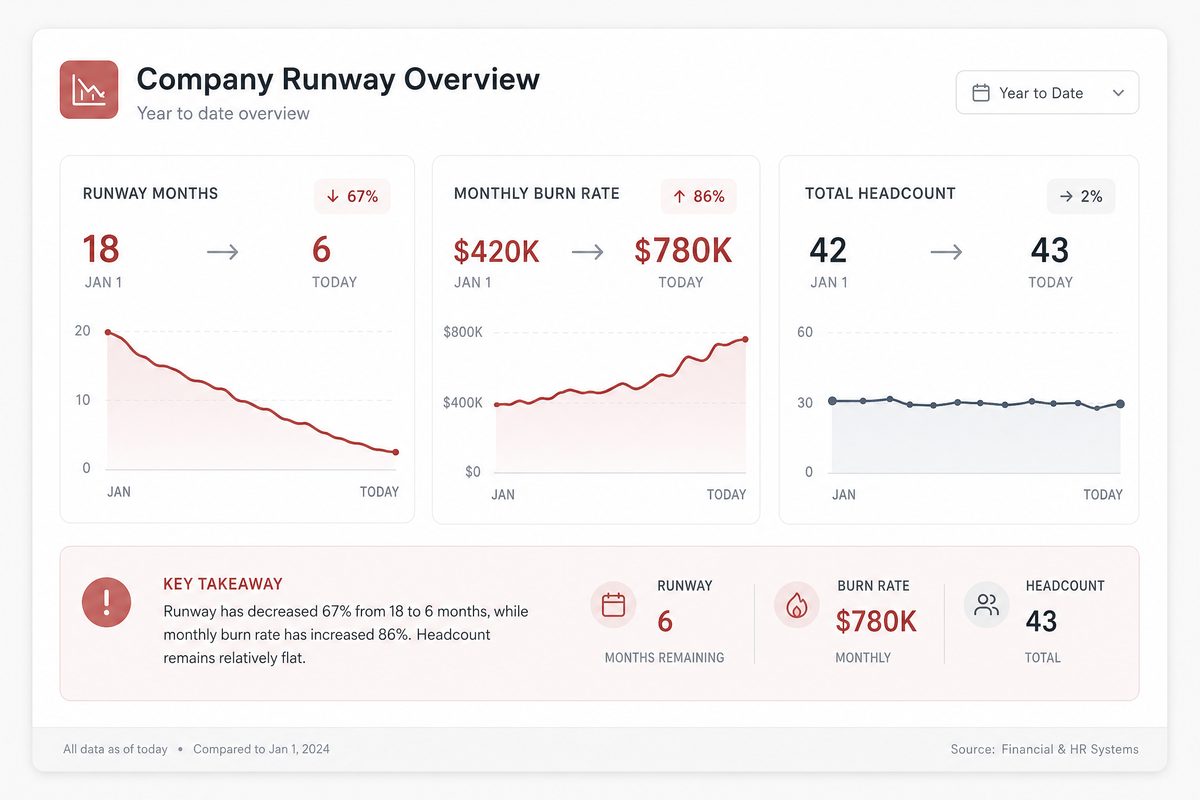
Before we get into the 11 signs, a quick reality check: the average startup has about 18 months of runway after a Series A (Carta data). That number matters because it tells you when the warning signs you're seeing are normal seasonality and when they’re a red alert. Read these signs like a fire alarm — don’t panic, but act fast.
Early Warning Signs (Months 6–12)
These are the subtle budget and operational signals. If you spot two or more of these, treat it like an early emergency. You’ve got time to plan, not time to be complacent.
-
Hiring freeze
That open backend role on Lever that’s been “paused”? Hiring freezes are often the first public sign leadership is recalibrating costs. They usually hit product and ops roles first. Track job postings: if three quarters of listed roles are frozen or removed, that’s bad.
-
Budget cuts on tools and perks
Zoom Pro downgraded to free. Slack apps killed. Lunch stipends reduced from $15 to $5. Perks get cut early because they’re easy optics. But cuts to engineering tools or servers are a stronger signal — they impact deliverables and timing.
-
Leadership turnover
When a VP of Sales or the CFO leaves abruptly and the company lists the exit as "pursuing other opportunities," that’s not just bad luck. Leadership attrition often signals internal disagreement about strategy or panic over numbers.
-
Delayed reimbursements
Expenses that used to clear in 3 days now take 3 weeks. Credit card charges sitting unprocessed is a cash-flow issue in plain clothes. Note the trend — file receipts, and don’t assume it’s a one-off.
Mid Warning Signs (Months 2–6)
If you’re seeing these, you need to be honest with yourself: your runway is shrinking fast. Start documenting everything and get your network ready.
-
"Restructuring" meetings
There’s a meeting invite titled "Re-org + Focus Areas" and it’s mandatory. If leadership is talking about "center[s] of excellence" or "doubling down on core metrics," that often translates to smaller teams and role eliminations. Pay attention to action items and timelines announced in these meetings.
-
Key engineers leaving
When senior engineers or the founder of a major product bolt, it’s rarely just about compensation. Look at who’s leaving and where they go: competitors, consulting, or early-stage startups. If multiple senior ICs leave within weeks, you’re in the danger zone.
-
Fundraising taking too long
If the Seed/Series A/bridge round is dragging past the expected dates, or if decks are repeatedly revised to show "conservative" forecasts, recognize this as a green flag turning yellow. Delays mean negotiations, and negotiations mean uncertainty about the cash that pays your bills.
-
Pivot talks
Every startup pivots. But a late-stage, aggressive pivot that requires new stack, new hires, or a pause on existing product work often suggests the current model isn’t paying the bills. Pivots are expensive and noisy — watch the exec emails and roadmap changes.
Late Warning Signs (Weeks to Days)
These signs are urgent. If you observe one or more, start your exit plan in earnest — today, not next week.
-
Payroll delays
This is the single most terrifying sign. If payroll slips or HR emails reassure "we’re working on it," get copies of your pay stubs, bank deposits, and ask HR for written confirmation of payroll schedule. And quietly check your bank account twice a week.
-
Mass Slack silence
The company that used to be a buzzing Slack hive goes eerily quiet. No GIFs, no onboarding channels, just a thread with a dozen read receipts and no replies. Silence often means folks are either out or preserving drama — either way, it’s not a good sign.
-
"All hands" with no agenda
Sudden, mandatory all-hands invites with vague titles like "Update" or "Important Company Update" are often the stage for layoffs or cash announcements. If an all-hands is scheduled outside normal cadence, prepare to ask direct questions and protect your personal logistics.
Exit Plan Timeline: What to Do at Each Stage
This is your battle plan. Follow it step-by-step. The timing windows below map to the Early / Mid / Late tiers above.
-
Months 12–6 (Early)
Do an audit: update your resume, GitHub, and LinkedIn; collect work samples and metrics (AARRR numbers, impact stories). Save money: build a 3-month emergency fund if you can. Start a private spreadsheet tracking job leads, recruiter contacts, and interview dates.
Actionable steps: request last 3 months of pay stubs from HR, snapshot your equity grant (grant date, vesting, strike price), and confirm your exercise window on termination. If you have stock options, log them in Carta or a spreadsheet and note potential tax implications.
-
Months 6–2 (Mid)
Accelerate networking. Start applying discreetly to roles that match your next move. Schedule informational calls on Monday mornings and keep them off company devices. Ask for references from managers who will give you honest support.
Actionable steps: set up job alerts at Hired, AngelList, and newjob.tech, reach out to three former colleagues a week, and make a list of 10 target companies. Prepare an "impact deck" (1 slide per project, metrics and outcomes) to share with recruiters.
-
Months 2–0 (Late)
Start interviewing aggressively and move quickly on offers. Request start dates that align with your runway needs. Negotiate compensation with an understanding of your equity timeline and severance expectations. Keep one foot out the door while you maintain performance at work.
Actionable steps: get hard copies of all HR policies (severance, PTO, COBRA info), and confirm final payroll timing. If you suspect immediate layoffs, schedule final reference calls now; don’t wait.
-
Weeks/Days (Immediate)
Prioritize: secure pay, finalize offers, and retrieve critical personal documents. If payroll is delayed, escalate to HR in writing and consider filing a wage claim depending on your jurisdiction. Keep emotion in check and make decisions that protect your family and finances.
Actionable steps: transfer critical personal files off company drives, freeze nonessential subscriptions, and push any outstanding contractor/consulting invoices. If you’re owed equity that vests on termination, consult a lawyer or an experienced founder immediately.
Template: Reaching Out to Your Network When You Sense Trouble
Be short, direct, and neutral. You don’t want to start rumors, but you do want leverage. Use this template for LinkedIn messages or email; tweak the tone to match your relationship.
Subject: Quick favor — 10-minute call?
Hey [Name], hope you’re well. I wanted to ask a quick favor: I’m doing some confidential career planning and would value 10 minutes of your time for advice on roles in [frontend/backend/product/ops]. I’m exploring opportunities that focus on [SaaS, fintech, e-commerce] and would love any referrals or introductions you can share.
If you’re open, when’s a good time this week for a 10–15 minute chat? Happy to share context. Thanks so much — I appreciate it.
— [Your Name], [Current Title at Company]
Pro tips: include a one-line "What I do / what I want" sentence, attach a one-page impact snapshot if they ask, and always follow with a thank-you email and a concrete ask (intro to X at company Y). Track who said yes/no and follow up once — no more than twice.
Questions to Ask Your Manager (If You Decide to Check)
Be direct but calm. These questions help you gauge truth from spin and buy you time to execute your plan. Ask in private and get answers in writing if possible.
- What is the current runway (months) and what burn reduction scenarios are you modeling?
- Is fundraising active, and what are the expected close dates?
- Are there specific roles or teams prioritized for cuts in the next 30/60/90 days?
- What support (severance, outplacement, references) would the company offer in the event of layoffs?
Final Practical Notes
Document everything. Save emails with numbers, payroll dates, and your equity grant. Move personal files off company systems and keep copies of your work samples. If you can, line up freelance or contract work as a bridge — 6–12 week contracts can be lifesavers between roles.
Remember: being cautious doesn’t make you disloyal. It makes you smart. Loyalty is great until your rent’s due and the payroll file is an empty spreadsheet.
If you want a fast way to see open roles that value startup experience, check newjob.tech — I built it as a quick bridge for folks who need a new role without the startup circus. Go look around, set alerts, and grab a safety rope before you need it.