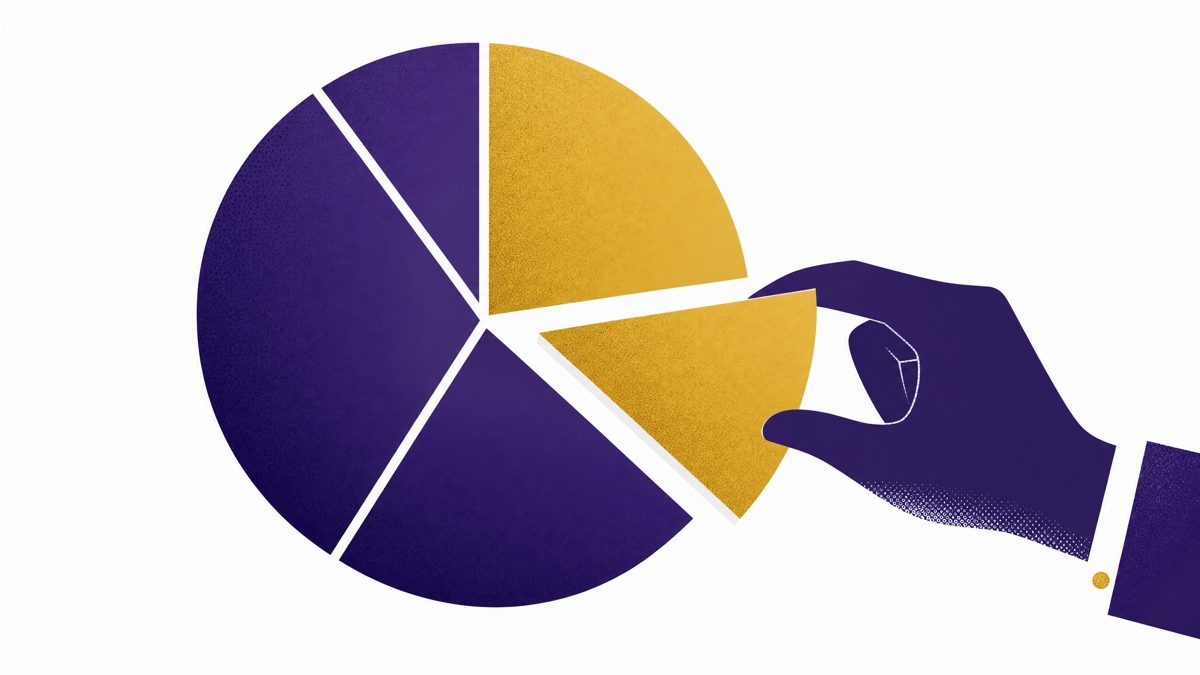

The concept, popularized by Jeff Bezos, is simple: No team should be larger than what two pizzas can feed (about 6-8 people). Small teams move faster, communicate better, and ship faster. It sounds amazing in a Medium post.
But the reality is usually much dumber. When a 40-person startup implements "two-pizza teams," they usually just end up with six fragmented silos, zero alignment, and a massive duplication of effort.
The missing half of the Two-Pizza theory
What startups forget is that Amazon's two-pizza teams only work because they are backed by the most robust internal API infrastructure on the planet. Amazon teams don't have to talk to each other because their software talks to each other via strict, standardized interfaces.
When a Series A startup tries this, they don't have that infrastructure. They have a monolithic codebase held together by duct tape.
So you end up with the "Growth Team" (6 people) breaking the "Core Product Team's" (6 people) database queries, while the "Platform Team" (4 people) has no idea what either of them is doing. Instead of moving fast, everyone spends 40% of their week in cross-team alignment meetings trying to figure out who broke staging.

Other startup lies you need to decode
The "two-pizza team" isn't the only piece of Silicon Valley folklore that gets weaponized by chaotic startups. Here are three other common lies you'll hear in interviews, and what they actually mean.
Lie #1: "We have a totally flat hierarchy"
What they say it means: "Anyone can talk to the CEO! No bureaucracy! Pure meritocracy!"
What it actually means: "We refuse to train managers, so the CEO is a bottleneck for 45 different people. Because there is no formal org chart, power is distributed entirely based on who the founders like the most."
A flat hierarchy is almost always a shadow hierarchy. In a healthy company, structure isn't bureaucracy; structure is clarity. You want to know exactly who approves your PTO and who reviews your code.
Lie #2: "We move fast and break things"
What they say it means: "We value velocity over perfection. We ship to production daily."
What it actually means: "We have zero automated testing, no staging environment, and the founders change the roadmap every time they read a new Paul Graham essay."
Moving fast is great. Breaking things is fine if you are building a consumer social app in 2012. If you are building B2B fintech in 2026, breaking things means losing customers. Look for teams that say, "We move fast because our CI/CD pipeline catches the breaks before they hit production."
Lie #3: "We're looking for a 10x Engineer / Ninja / Rockstar"
What they say it means: "We only hire the absolute top 1% of elite talent."
What it actually means: "We are severely understaffed and need one person to do the jobs of a frontend dev, a DBA, a DevOps engineer, and a product manager, but we only want to pay one salary."
The "10x engineer" myth is usually a cover for unreasonable expectations. Healthy engineering cultures don't rely on lone-wolf heroes; they rely on solid documentation, good tooling, and predictable velocity.
How to spot the difference
When a startup uses these buzzwords, don't immediately run away—but do push back. If they say "two-pizza teams," ask them how those teams handle cross-functional dependencies. If they say "flat hierarchy," ask them how conflict resolution works when two peers disagree.
If they have a real system, they will explain it clearly. If they just read a book about Amazon last weekend, they will stutter.