For context, Product has 3,671 roles. Data has 6,395. Finance has 4,490. Even People/HR — a function that barely existed at startups a decade ago — has 1,022 listings. Design, the discipline that entire conferences and Twitter subcultures are built around, is one of the smallest hiring categories in the startup ecosystem.
I double-checked the numbers. Then I started asking around.
The shrinking footprint
Let's break down what those 3,627 design roles actually look like:
- Product Designer: 1,558 (43%)
- UX Designer/Researcher: 375 (10%)
- Graphic Designer: 350 (10%)
- Brand Designer: 180 (5%)
- UI Designer: 130 (4%)
- Other (instructional, interior, etc.): 1,034 (28%)
The "Other" category is revealing. A significant chunk of roles with "design" in the title aren't what the design community would recognize as design jobs — they're instructional designers, interior designers for office spaces, and hardware design engineers. Strip those out, and the core digital design roles (product, UX, UI, brand, graphic) total roughly 2,600 positions.
That's 2.5% of all startup jobs. At companies that supposedly worship user experience.
Three forces driving the decline
This isn't a temporary dip. Three structural forces are compressing the design function at startups, and none of them are reversing.
1. AI design tools have changed the math
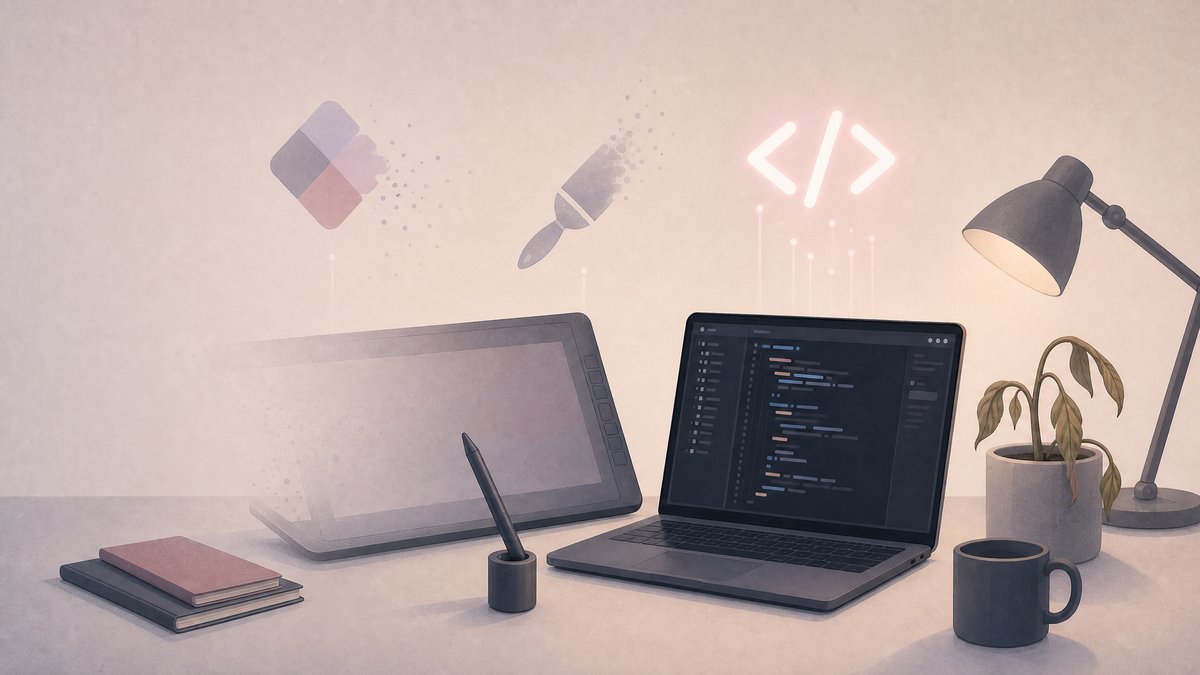
Figma's AI features, Galileo, and a dozen other tools now generate production-quality UI components from text prompts. A product manager who would have needed a designer to mock up three variations of a settings page can now generate them in minutes.
This doesn't eliminate the need for designers. But it eliminates the need for as many designers. The ratio of designers to engineers at startups has shifted from roughly 1:4 five years ago to something closer to 1:8 or 1:10 today. A single senior product designer can now cover the surface area that used to require a team of three.
The designers I've talked to are split on whether this is good or bad. The optimistic view: AI handles the commodity work (icon sets, basic layouts, component variations), freeing designers to focus on harder problems like information architecture, user research, and interaction design. The pessimistic view: most startups didn't hire designers for the hard problems in the first place. They hired them to make screens. And now screens make themselves.
2. Founder-led design is the new default
A pattern I've noticed across early-stage startups: the founder does the design. Not because they're trained designers, but because modern design tools have lowered the skill floor enough that a technically-minded founder can produce "good enough" interfaces.
Tailwind CSS and component libraries like shadcn/ui mean that an engineer-founder can build a presentable product without ever opening Figma. The result won't win design awards, but it'll be functional, consistent, and — crucially — shippable without waiting for a designer to be hired.
This pushes the first design hire later in the company's lifecycle. Where startups used to hire a designer as employee #5 or #10, many now wait until employee #30 or #50. By that point, the product's visual language is already established (by engineers), and the designer's job becomes refinement rather than creation.
3. The "full-stack designer" expectation
The design roles that do exist at startups have expanded in scope to the point where they're barely recognizable compared to five years ago. A "Product Designer" listing at a startup in 2026 typically expects:
- User research and interview synthesis
- Information architecture and user flows
- High-fidelity UI design in Figma
- Basic prototyping and animation
- Design system maintenance
- Front-end implementation awareness (CSS, basic React)
- Data analysis of feature usage
- Stakeholder presentation and alignment
This is three jobs compressed into one. The result is that startups hire fewer designers, but each one does dramatically more. It's efficient for the company. It's exhausting for the designer. And it means the total number of design headcount keeps shrinking even as the scope of "design work" grows.
What this means for designers
If you're a designer looking at the startup job market, the honest assessment is: the raw numbers are against you. There are fewer roles, more competition per role, and higher expectations for each hire.
But the picture isn't uniformly bleak. Here's where the opportunities actually are:
Design engineering is booming. The hybrid role — someone who can design in Figma and implement in React — is one of the most sought-after profiles at startups. These roles often aren't listed under "Design" at all. They show up as "Frontend Engineer" or "UI Engineer" with a note about design skills. If you can code, your addressable market expands dramatically.
Research is undervalued and underleveraged. Most startups know they should be doing user research. Almost none of them are doing it well. A designer who can run research, synthesize findings, and translate them into product decisions is genuinely rare and genuinely valuable. The problem is that startups rarely hire for this explicitly — you have to sell it as part of a broader product design role.
B2B and enterprise design is less competitive. The sexiest design roles — consumer apps, AI products, creative tools — attract the most applicants. B2B dashboard design, admin panel UX, and enterprise workflow optimization attract far fewer. The work is less portfolio-friendly but often more intellectually interesting, and the companies are more willing to pay for it because good B2B design directly drives revenue.
The uncomfortable question
Here's what I keep coming back to: is the decline of design jobs at startups a problem, or is it a correction?
The design hiring boom of 2018-2022 was partly driven by genuine demand and partly driven by a bull market where startups had more money than discipline. Companies hired design teams because they could, not always because they needed to. The current contraction might simply be a return to a sustainable ratio.
The designers who will thrive in this environment are the ones who can demonstrate measurable impact — not just beautiful interfaces, but interfaces that moved a business metric. Conversion rate improvements, reduced support tickets, faster user onboarding. The era of design as a pure craft discipline at startups is fading. What's replacing it is design as a business function, with the same accountability for outcomes that engineering and product already face.
That's a harder sell for designers who got into the field because they love making beautiful things. But it's a more durable career foundation than hoping the hiring numbers go back to 2021 levels. They probably won't.